Pre & Post Natal Pain Treatment in Stoneham
A back that gave out in the second trimester, pubic bone pain rolling over in bed, or a core that still does not feel like yours a year later.
What causes pre and post natal pain?
Somebody told you this is just part of pregnancy. Somebody else told you it is just what happens after kids. Common and normal are not the same word, and neither one means untreatable. Pregnancy changes load, position and tissue over nine months, and the postpartum body is recovering from a genuine physical event whether that was a vaginal birth or a cesarean. Pain, weakness and pressure that persist past those first weeks are signals about how the system is coping, and they are exactly the kind of signal physical therapy is built to read.

Sharp pain at the pubic bone, deep ache in one buttock, or a stab rolling over in bed and getting out of the car. The pelvis is three bones held together by ligaments and stabilized by muscle. When ligaments soften and the load in front grows, the muscular half of that job matters far more, and if the glutes and deep abdominals are not sharing it, the joints take the strain. It responds well to targeted strength work, and you do not have to wait until after delivery.
The connective tissue running between the two halves of your six pack thins and widens to make room. Every pregnancy does this. The question afterward is not only how wide the gap is, but whether that tissue can generate tension when you load it. A belly that domes when you sit up, a back that fatigues fast, or a core that feels disconnected are signs the system is not transferring force well. It is trainable, and crunches are usually the wrong starting point.
Your center of mass moves forward and up over three trimesters. The low back extends more, the ribcage flares, the hip flexors shorten, and round ligament pain shows up in the lower abdomen when you stand or twist quickly. None of that is damage. It is a body adapting fast to a changing shape, and the aches come from the areas absorbing the change without help. Positioning, breathing and specific strength work change how much they have to absorb.
Nobody warns you about this one. Hours a day rounded over a feeding baby, a car seat carried in one hand, a toddler on one hip. The result is a stiff mid back, aching between the shoulder blades, neck pain and tender wrists and thumbs. It is a straightforward overload of tissue doing a new job many hours a day, and it responds to hands-on work plus changes to how you position and load yourself through those tasks.
Both routes leave healing tissue. A cesarean is abdominal surgery through several layers, and the scar can end up adhered, numb or tender, pulling on the abdominal wall and even referring into the low back. Perineal tears and episiotomies can heal stiff enough to make sitting or intimacy painful. Scar tissue remodels with load and hands-on work, months or years later, and scar mobilization is ordinary, well established treatment.
Six weeks is a clearance to resume activity, not evidence that your tissue is ready for it. Running puts several times body weight through a pelvic floor and a set of hips that have not loaded that way in a year. When people jump straight back, what usually shows up is leaking, heaviness or hip and back pain. A graded return, built on strength you rebuild first, is what prevents that.
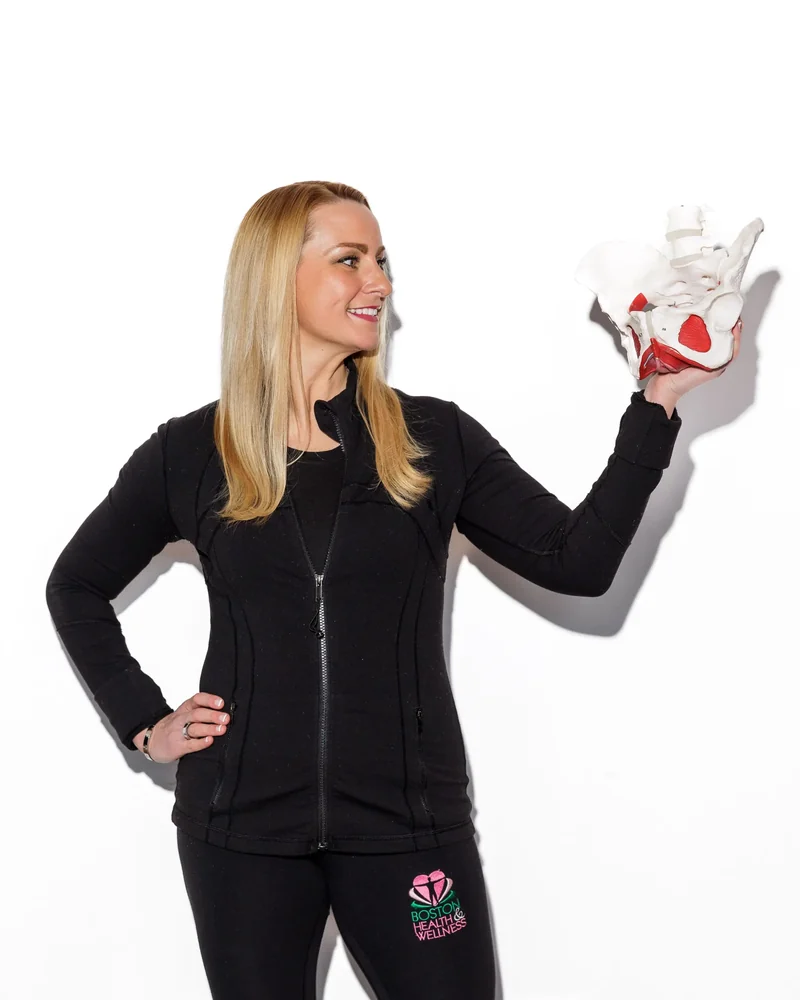
How physical therapy in Stoneham helps.
The evaluation is a conversation first, in a private room, one on one with the same therapist each visit. You will be asked about your pregnancy or your birth, your pain, your bladder and bowels, and what you have stopped doing. A pelvic floor assessment may include an internal exam when it is useful, and it is always optional: you control the pace and can decline any part of it, and many plans run entirely on external work. Treatment blends hands-on work at the hips, ribs, mid back and abdominal wall, scar mobilization for a cesarean or perineal scar, and coordination training between your breath, deep abdominals and pelvic floor. Then it becomes strength, graded toward the thing you want back, whether that is sleeping without pubic pain or running again. Several of our licensed physical therapists are pelvic floor certified, including founder Dr. Stefanie DePaul. Massachusetts is a direct access state, so no referral is needed to book.
What to expect from your recovery.
Evaluation
We listen first, then assess: hips, pelvis, ribcage, abdominal wall, breathing and, if you choose to include it, the pelvic floor. Bring the baby if you need to. You leave the first visit with a clear explanation of what is generating your symptoms and a plan you can start that week.
Hands-on plan
Manual therapy for the joints and soft tissue carrying the load: SI joint and pubic symphysis, hip flexors, mid back and ribs, plus scar mobilization for a cesarean or perineal scar. Alongside it you get positions and strategies that make feeding, carrying and sleeping less provocative, so you are not just enduring the days between visits.
Progressive strengthening
Then we rebuild. Deep abdominals and pelvic floor working with your breath, then glutes and trunk, then loaded, real world tasks: lifting a car seat, stairs with a toddler, a return to running built in stages rather than all at once. Most people feel a change in the first few visits, and the endpoint is whatever you want your body back for.
Very professional, welcoming and confident. Easy parking and scheduling.
Pain rarely travels alone.



Ready when you are.
Saturday: 7:00am - 1:00pm | Sunday: Closed