Cupping Therapy in Stoneham
The knot between your shoulder blades comes back a day after every massage, because pressing down on stuck tissue is not the same thing as lifting it free, which is what cupping does.
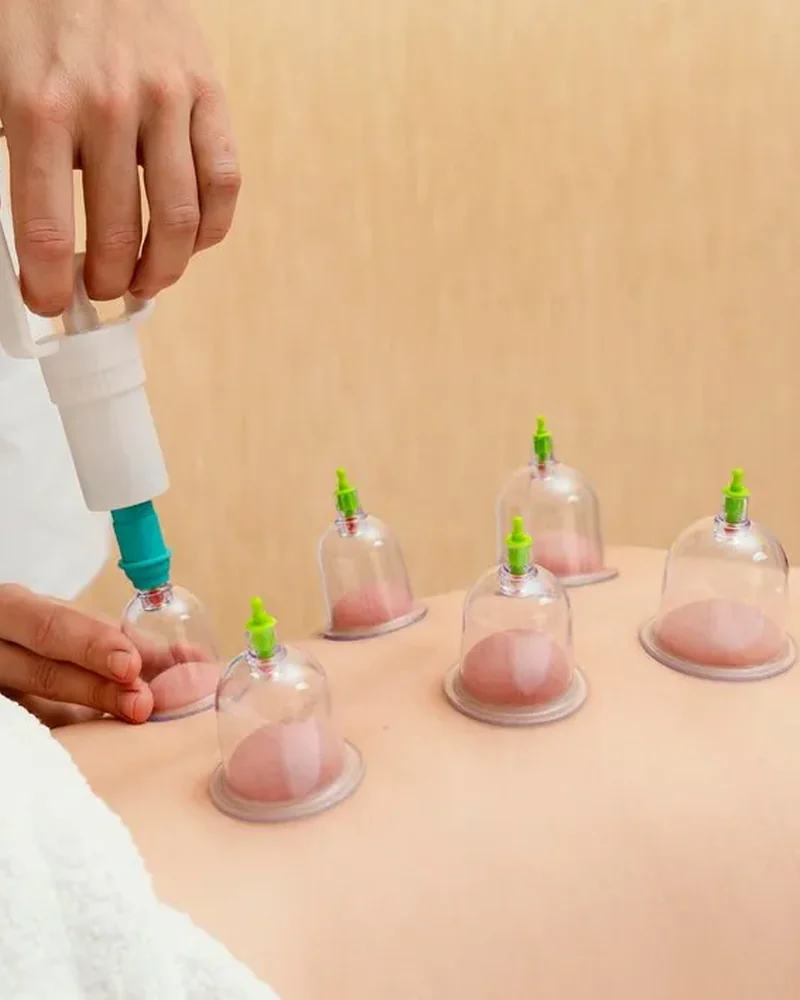
What is cupping therapy?
Cupping is a decompressive soft tissue treatment. Cups are placed on the skin and a vacuum is drawn inside them, which lifts the skin, the fascia and the superficial muscle up and away from the layers underneath. Nearly every other hands-on technique pushes into tissue. Cupping pulls it apart. That change of direction matters, because layers that have become stuck to each other cannot be separated by pressure from above, no matter how deep a thumb goes. The suction draws fresh blood into the area, decompresses the tissue, and gives the nervous system a very different input than pressure does, which is often why a muscle that has resisted everything else finally lets go. The marks are the part people ask about. They are not bruises from impact. They are blood drawn toward the surface by the suction, and they fade on their own over the following days. How dark they are says more about the circulation in that particular spot than about how hard your therapist worked.
How your therapist uses the cups depends on what they find. Cups left stationary over one stubborn point work that spot deeply. Cups moved in slow strokes across a broader area cover more ground and suit a whole region that has gone tight. Cupping while you move the limb combines the decompression with active motion. In every version it is a step in the visit, not the visit itself. Your licensed physical therapist puts the looser tissue straight to work with motion and strengthening, so the release turns into something your body keeps rather than something that wears off on the drive home. You do not need a referral to book, because Massachusetts is a direct access state, and we are in network with almost all plans, so call before your first visit and we will check your benefits.
Who it's for.
Cupping suits tissue that is tight, stuck and unresponsive to pressure. Three different people, one common thread.
Desk-bound and locked between the shoulder blades
You spend the day at a keyboard, and by mid afternoon the mid back and neck feel welded together. Massage helps until tomorrow. Cupping decompresses that tissue instead of compressing it, and paired with the postural strengthening we send you home with, the tightness stops rebuilding itself by the same time every day.
A lifter with heavy legs between sessions
Training is going well, and your quads and calves feel thick and stiff for days afterward. Gliding cups along those muscle groups moves fluid through tissue that has gone stagnant and takes the heaviness out of the legs, so your next session starts from a decent baseline instead of from soreness left over from the last one.
An old scar or surgical site that pulls
Months after the operation the incision has healed, but the tissue around it still feels tethered and it tugs when you reach or twist. Gentle cupping around a well healed scar helps mobilize the layers that bound down while you were healing. Your therapist inspects the site first and works only where the skin is fully closed and sound.
What to expect in a session.
Cupping is short, and the sensation is unlike anything else in the clinic. Here is what actually happens.
Assessment and set up
Your therapist locates the restricted area by hand and checks the motion it is limiting, so there is something to compare against later. Lotion goes on the skin, the cups are placed, and the suction is drawn to a level you confirm is strong but comfortable. You feel the lift immediately, a heavy pulling pressure rather than a sharp one.
The decompression
The cups either stay put while the tissue softens or get glided along the muscle in slow strokes, depending on what your therapist found. Most people find this stretch of the session oddly relaxing once the first minute has passed. The suction stays adjustable the entire time, so speak up if the pull becomes more than you want to sit with.
Cups off, then movement
The cups release and the area usually feels lighter and warmer right away, with the circular marks visible on the skin. Your therapist then re-checks the motion you started with and puts you to work inside it. That last part is what makes the difference last past the drive home, and it is the reason cupping lives inside a plan.
Tell your therapist before treatment if you take blood thinners, bruise easily, have fragile or thin skin, or are pregnant. Cupping is not used over broken skin, an open wound, an active skin condition or a recent surgical incision. A deep pulling sensation during the session and circular marks that fade over the following days are both normal. Sharp pain, blistering, or skin that stays sore instead of settling is not, so say something while you are on the table and your therapist will ease the suction or move to another approach.
I'm extremely happy with the program at Boston Health! Elyse has been very patient with me and has steered me through a particularly significant shoulder injury rehab. Can't say enough about the care!
Where to go next.
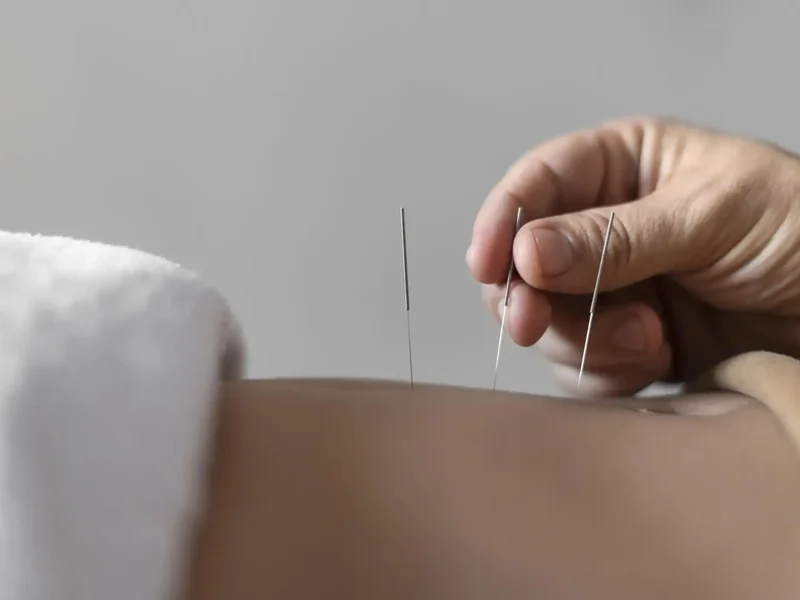
Dry Needling
Precise trigger point release that quiets stubborn muscle knots fast.
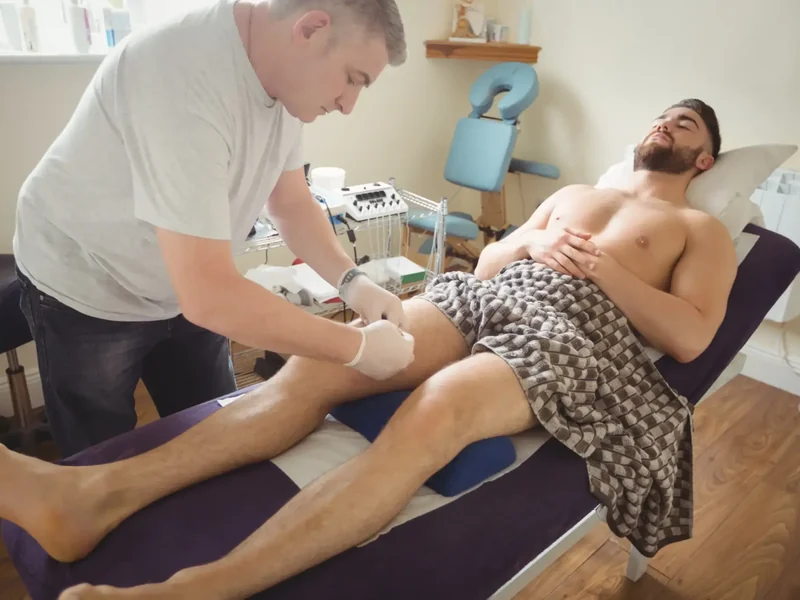
Graston Technique
Stainless instruments that find and release scar tissue you cannot reach by hand.
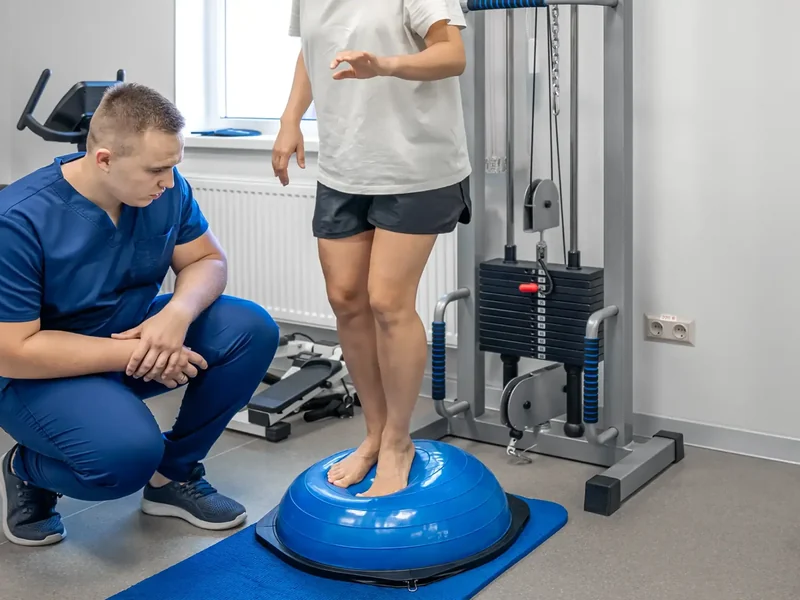
Balance & Gait Disorders
Confidence on stairs, curbs and uneven ground, rebuilt step by step.
Ready when you are.
Saturday: 7:00am - 1:00pm | Sunday: Closed