Graston Technique in Stoneham
Some scar tissue does not soften with heat, stretching or time, and hands slide right over it. Graston Technique is built to find it.
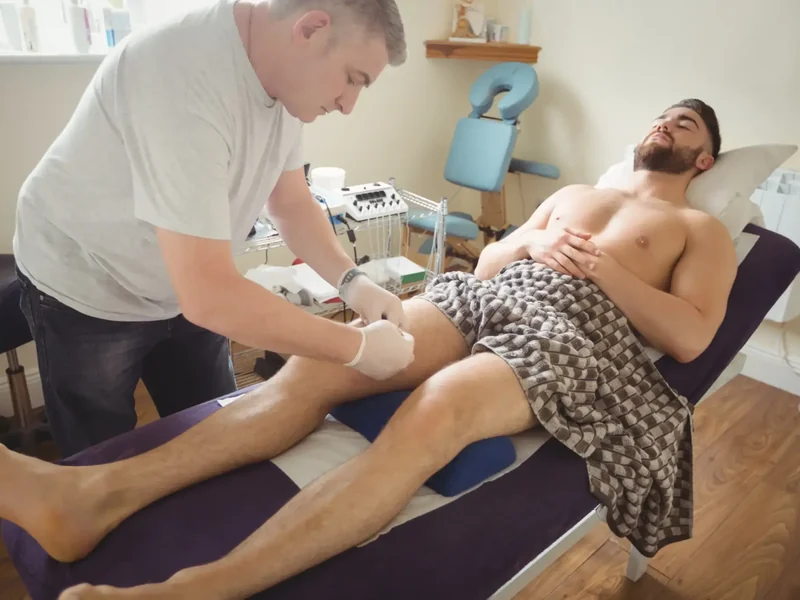
What is Graston Technique?
Graston Technique is a specific, brand-name system of instrument assisted soft tissue mobilization. Instead of thumbs and knuckles, your therapist works with a set of contoured stainless steel instruments, each shaped for a different part of the body: a broad curved one that covers the back or the thigh, a small hooked one that fits around the ankle bone, the wrist or the Achilles. The instruments do a job hands genuinely cannot. Stainless steel carries vibration, so when a beveled edge passes over tissue that has thickened or bound down, the restriction registers as a gritty, grainy feedback traveling up into your therapist's hand. A restriction the fingers would glide straight past announces itself. That is why the instrument is a diagnostic tool first and a treatment tool second, and it is why Graston is taught as a credentialed technique rather than something you pick up from a video.
The other half of the brand is the protocol, and the order is not optional. A session starts by warming the tissue, moves into the instrument work, goes directly into stretching the tissue that was just treated, then into strengthening it, and finishes with whatever aftercare your case calls for. There is a reason for that sequence. Instrument work stirs up tissue that has healed in a disorganized, glued-down pattern and briefly makes it reworkable. What happens in the minutes after decides how it lays back down, so the stretching and the loading are the treatment, not the cool-down. Graston is one branded system inside a much wider category. If you want the bigger picture, including when your therapist will reach for an instrument at all instead of working by hand, read our page on IASTM in Stoneham. Either way, Massachusetts is a direct access state and no referral is required to get started.
Who it's for.
Graston earns its place when the problem is dense, chronic tissue rather than an angry, freshly injured area. These are the cases we reach for it most in Stoneham and Wakefield.
Heel or Achilles pain that owns your first steps
You put a foot on the floor in the morning and wince, it loosens up by mid-morning, and it is back by the time you get home. Plantar fascia and Achilles tissue that has been irritated for months tends to thicken, and that thickened tissue is exactly what the instrument finds. Combined with calf and foot strengthening, the goal is a morning where the first step is simply a step.
A surgical scar that has glued itself down
The incision healed cleanly and the skin looks fine, but the area feels tight, tethered, or oddly numb, and the joint underneath moves less than it should. Scar tissue can bind the layers that are meant to slide across each other. Careful instrument work along and across the scar restores that glide, which is often the missing piece when a knee or shoulder rehab has quietly stalled.
Elbow and forearm pain from work you cannot stop doing
Hairstylists, tradespeople, hygienists, nurses, anyone gripping a tool all day. Tendon trouble on the outside of the elbow rarely resolves on its own because you cannot rest the arm you earn a living with. Instrument work on the forearm, then graded loading of the tendon itself, is the combination that lets you keep working while the tissue actually rebuilds.
What to expect in a session.
Graston follows a taught sequence. Here is that sequence as you will actually experience it.
Warm up, then map the tissue
The area gets warmed first, usually with movement or heat, because cold tissue reads poorly and treats worse. Your therapist then applies an emollient so the instrument can glide, and sweeps it across the region at a shallow angle. This first pass is a scan. Where the instrument catches that gritty feedback, that is the restriction, and your therapist will usually tell you where they are finding it before treating anything.
The instrument work
Now the strokes get more deliberate: specific angles, specific directions, worked along and across the fibers over the areas that lit up during the scan. Each region gets a few focused minutes, not an entire visit. Expect a scraping sensation with some tenderness where the tissue is worst, and expect your skin to go pink. Firm and tolerable is the target, and your therapist adjusts the moment you tell them it has crossed a line.
Stretch, load, and take it home
Straight off the table you stretch the tissue that was just treated, then load it, because that is what tells the fibers how to reorganize. Your therapist reassesses the movement that brought you in so you both know whether the session moved the needle. You go home with specific stretching and strengthening for the days between visits, plus clear guidance on what to do about soreness.
Redness during and after treatment is expected and usually fades within the hour. Small pinpoint spots or light bruising over a stubborn area can happen too, and mild soreness for a day or so is normal. What is not normal: sharp or escalating pain during the strokes, bruising that spreads or keeps darkening, skin that breaks, or swelling that increases afterward. Say something the moment treatment stops feeling tolerable and your therapist will change the angle, ease the pressure or work by hand instead. Tell us in advance if you take blood thinners, bruise easily, have a bleeding disorder, are pregnant, or have a rash, open wound, recent stitches or an infection in the area, and we will treat around it or choose a different approach. Questions before your visit are welcome at (617) 843-5320.
I’m very grateful to Dr. Stefanie DePaul for helping me with my knee recovery. I had a meniscus tear and was struggling with pain and discomfort.
Where to go next.
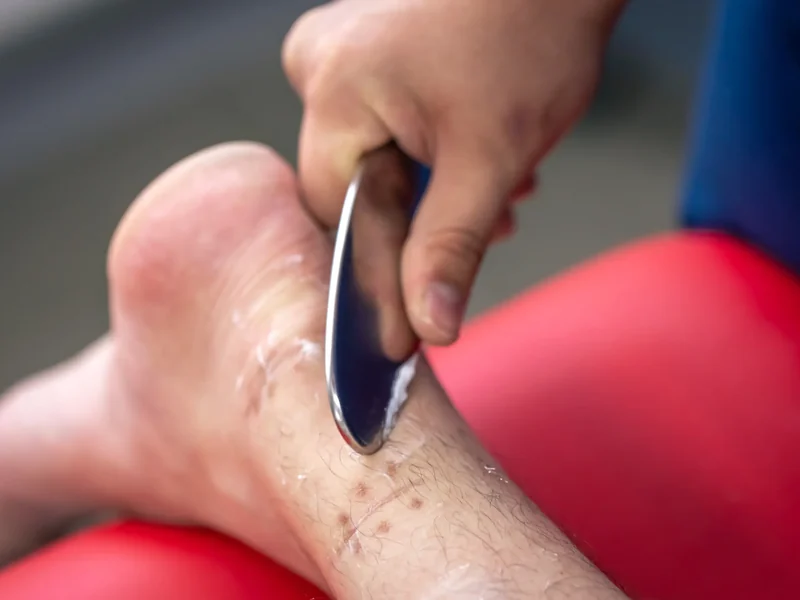
IASTM
Instrument assisted soft tissue work for adhesions, scar tissue and chronic tightness.
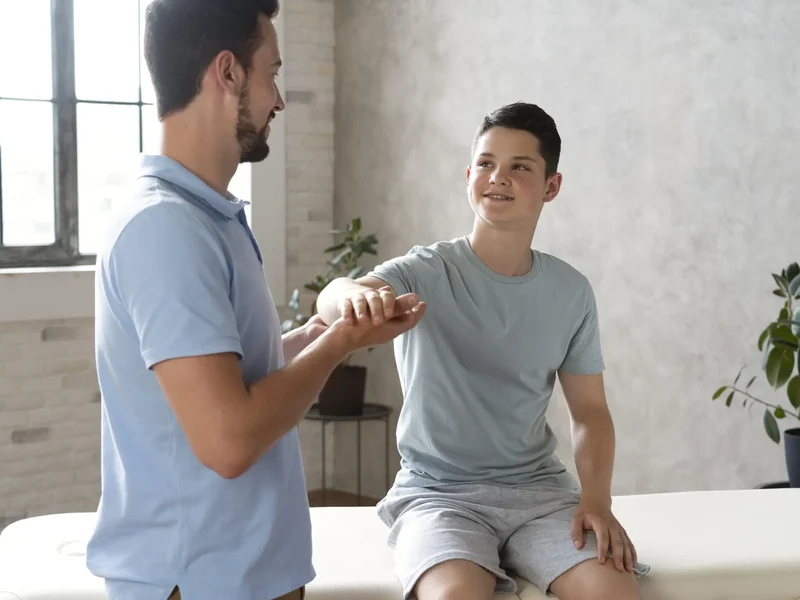
Manual Therapy
Skilled hands-on treatment that restores joint motion and releases tension.

Bladder & Bowel Dysfunction
Urgency, frequency and constipation respond to pelvic floor therapy.
Ready when you are.
Saturday: 7:00am - 1:00pm | Sunday: Closed