Hip & Knee Pain Treatment in Stoneham
Stairs, the first few minutes of a walk, standing back up after a long meeting: the ache shows up in the ordinary parts of the day and quietly shrinks what you are willing to do.
What causes hip and knee pain?
You were told it is wear and tear. You were told to take it easy and see how it goes. Neither explained why it hurts going down the stairs but not up them. The knee sits between the hip and the foot and absorbs whatever those two fail to handle. When strength, mobility or timing goes missing anywhere along that chain, the joint that hurts is often not the joint that caused it. Sorting that out is the difference between managing this for years and changing it.

The kneecap runs in a groove at the end of the thigh bone, and it stays centered only if the muscles above and around it pull evenly. When the hip lets the thigh rotate inward, or the quad fires unevenly, the kneecap drifts and the surfaces underneath get irritated. It shows up going down stairs, getting out of a car, or sitting with the knee bent through a movie. The knee is where you feel it. The hip is usually where the correction happens.
The glutes and deep hip stabilizers control what your leg does every time you put weight on it. When they are weak or slow to fire, the thigh collapses inward, the knee twists slightly with each step, and load ends up in tissue that was not designed to take it. No single step causes damage. It is the thousands of them that add up. This is why so many knee problems get solved with hip work.
Cartilage thins with time and use, and joints get stiffer and sorer as it does. What surprises most people is how poorly imaging predicts symptoms: plenty of painful joints look mild on a scan, and plenty of rough-looking joints do not hurt. Strong muscle around an arthritic joint absorbs load the cartilage no longer wants, and regular controlled motion keeps the joint moving well. Arthritis is a reason to build strength deliberately, not a reason to stop moving.
The menisci are two wedges of cartilage that spread load across the knee and keep it stable through a bend and a twist. They tear suddenly with a planted foot and a hard rotation, or fray gradually over years of use. A tear on a scan does not automatically mean surgery, because many degenerative tears settle with graded loading and strength work that reduces what the damaged edge absorbs. Which route makes sense depends on your symptoms, your goals and how the knee tests.
Pain on the outside of the hip, worse lying on that side at night and worse after standing on one leg, is usually the gluteal tendons and the bursa underneath them being compressed. It often gets called bursitis, but the tendon is typically the real story, irritated by too much compression and not enough strength. Stretching it across the body tends to make it angrier. Loading it progressively and taking pressure off it during the day is what settles it.
A replaced joint changes the mechanics of the whole leg, and the muscles around it have often spent years avoiding work before the surgery happened. Stiffness, swelling and quad weakness in the months afterward are normal, and they respond well to structured rehab: recovering the last degrees of bend and straightening, retraining a normal walking pattern, and rebuilding strength in graded steps. If surgery is ahead of you or behind you, see our pre and post surgical care.

How physical therapy in Stoneham helps.
The evaluation comes first, and it covers the whole leg rather than just the sore part. A licensed physical therapist watches you walk, squat, step down and balance on one leg, tests hip and quad strength, measures motion at the hip, knee and ankle, and finds where the chain is breaking down. Then the hands-on work. Joint mobilization recovers the range the hip or knee has given up, and soft tissue work through the quad, glutes and calf takes tension off the structures being compressed, so walking and stairs get easier while the strength work is still ramping up. Then we load it, progressively and on purpose. Rebuilding hip and quad strength is what changes the mechanics for good, and it is the part most people never reach in a busy clinic. You work one on one with the same therapist every visit in Stoneham or Wakefield, and because Massachusetts is a direct access state, you can usually book without a referral.
What to expect from your recovery.
Evaluation
We watch you walk, squat, step down and stand on one leg, then test strength and motion at the hip, knee and ankle. We are looking for the link in the chain that is not holding up, which is often not the joint you came in about. You leave knowing what we found and what the plan is built around.
Hands-on plan
Then we work on the joint and the tissue directly. Mobilization to recover the motion the hip or knee has lost, soft tissue work through the quad, glutes and calf, and swelling management where the joint is irritated. Stairs and walking usually get easier in this phase, which makes the strengthening that follows far more productive.
Progressive strengthening
Then we load. Hip and quad strength gets built in graded steps, from supported and controlled to single leg, loaded, and eventually the walking, lifting or running you want back. Blood flow restriction training earns its place here when the joint cannot tolerate heavy weight yet. This phase is what keeps the pain gone.
Everyone here is the best! They’ve helped me with my recovery from two total knee replacement surgeries, plus are helping with some balance issues. Elliot, who I’ve seen most, is fantastic. 😃♥️
Pain rarely travels alone.

Elbow, Wrist & Hand Pain
Grip, type and lift without the ache that follows you all day.
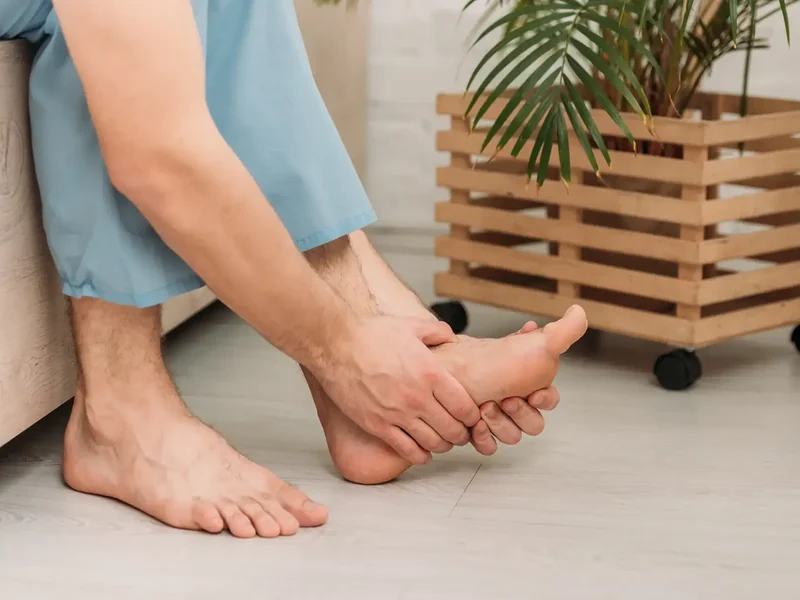
Foot & Ankle Pain
The first steps in the morning should not be the worst part of your day.
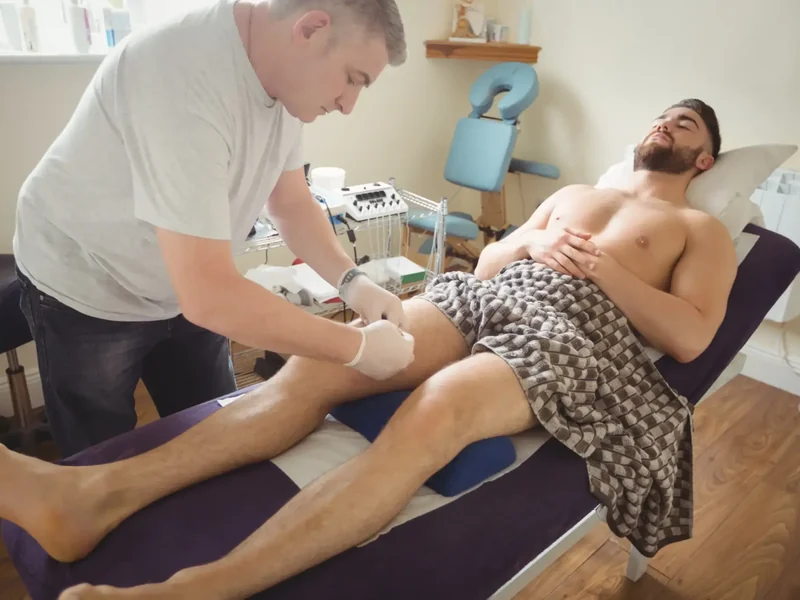
Graston Technique
Stainless instruments that find and release scar tissue you cannot reach by hand.
Ready when you are.
Saturday: 7:00am - 1:00pm | Sunday: Closed
Pick a day and time that works for you in our online scheduler. Prefer to talk it through? Call (617) 843-5320.
Book Online Now