Pre & Post Surgical Conditions Treatment in Stoneham
You have a date on the calendar, a folder of instructions, and no real idea what the weeks after surgery are going to ask of you.
What causes pre and post surgical conditions?
Surgery fixes a structure. It does not restore the strength, motion and control that were lost on the way to needing it, and it adds a fresh round of swelling, immobilization and guarding on top. That gap is the whole reason rehab exists, and it opens on both sides of the operating room. What you bring into surgery sets the floor you start from afterward. What happens in the first weeks after decides how much of your range and strength you keep. These are the mechanics people struggle with most.

By the time surgery is scheduled, most people have spent months avoiding the movement that hurt. The joint stiffened, the muscle around it shrank, and the other side started doing the work. Surgery does not undo any of that. Whatever strength and range you have on the morning of the operation is the floor you begin from afterward, which is exactly why prehab exists. Raising that floor is one of the few parts of a surgical outcome you control directly.
Swelling inside a joint does something people are rarely told about. It reflexively inhibits the muscle crossing that joint, so the quad after knee surgery is not just weak, it is partly switched off. You can be trying honestly and still not produce a contraction. Managing swelling plus specific activation work reconnects the signal, and it needs to happen early, because a muscle that stays inhibited keeps losing size.
Healing tissue lays down collagen in whatever pattern the area is used in. Moved appropriately, within what the surgeon has cleared, it organizes along the lines of stress and stays pliable. Left still, it binds down across planes it was never meant to cross, and the joint gives up range that is harder to win back later. This is why early rehab often looks unimpressive and matters enormously. Protecting a repair and preserving motion are not opposites when the timing is right.
Muscle is expensive tissue and the body sheds it quickly when it is not being asked for. A sling, a brace, a period of limited weight bearing, all of it costs strength faster than people expect. Getting a training stimulus into the limb while it is still protected is the answer, which is why blood flow restriction training is useful after surgery: it works with very light loads.
Long before surgery you learned to limp, to load the other leg, to reach with the other arm. Those patterns were sensible then and they do not disappear because the structure was repaired. Left alone they overload the side that has been covering, which is how a hip replacement becomes a knee complaint. Retraining how the movement is performed is separate work from rebuilding strength.
The instinct to guard something that was cut into is rational, and for a while it is correct. The difficulty is knowing when it stops being correct, because nothing announces that day. People often stay in protection mode well past the point where load builds the tissue rather than threatens it. Knowing where that line sits, for your procedure and your surgeon's protocol, is a large part of what your therapist is for.
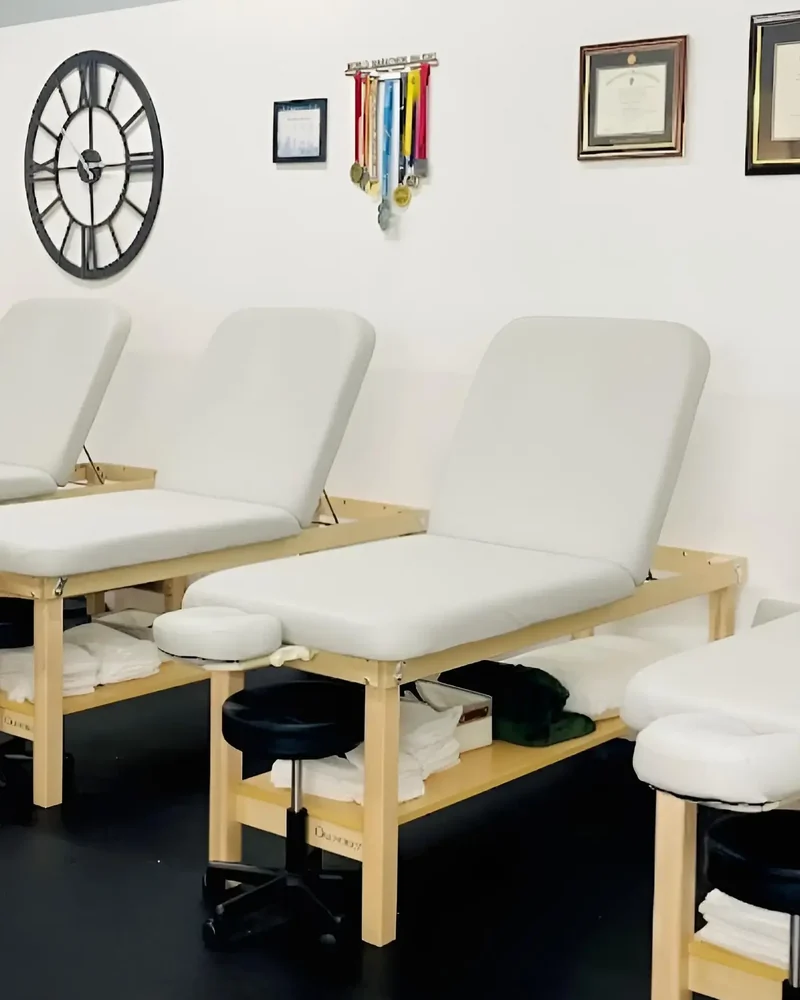
How physical therapy in Stoneham helps.
Start with the obvious: we work inside the timeline and restrictions your surgeon sets. Your protocol is the boundary of the plan, not a suggestion, and where something is unclear we would rather ask than guess. Within those limits the evaluation is thorough. Before surgery your licensed physical therapist measures the range, strength and control you have and identifies what can realistically be improved in the time available. After surgery it is swelling, wound status, range, muscle activation and how you are moving, reassessed as you progress rather than assumed from the calendar.
The hands-on work carries most of the early load. Gentle joint mobilization to the segments above and below, soft tissue work around the incision once it is appropriate, swelling management, and passive and assisted range within your cleared limits. This is the part patients underestimate and later credit, because motion recovered early is motion you do not fight for later.
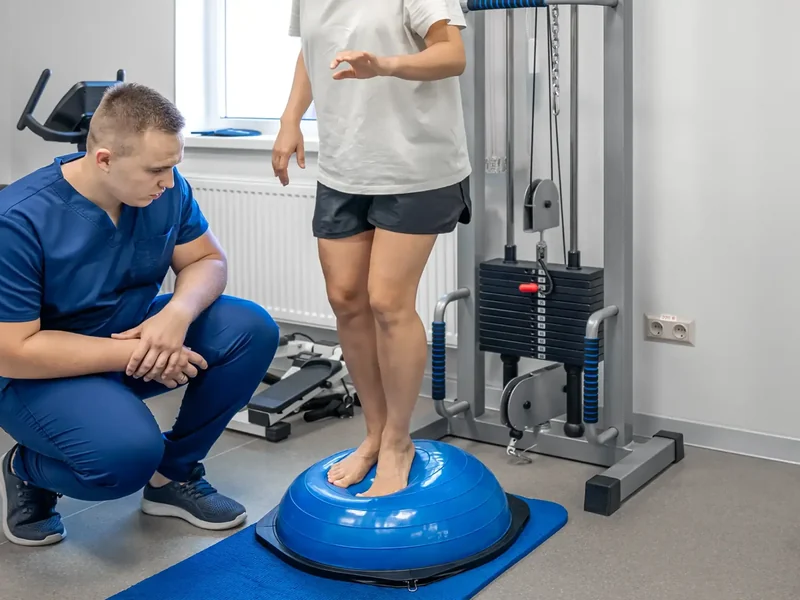
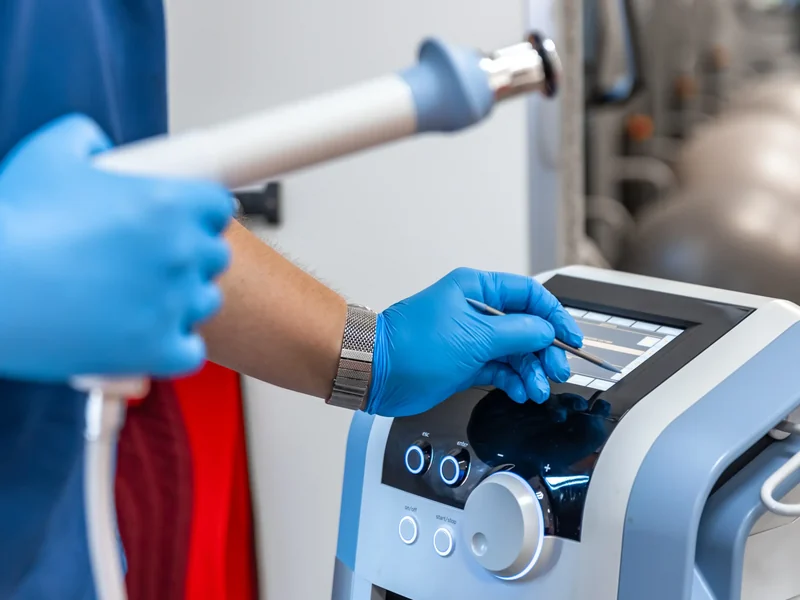
Then strength, progressively. Activation first, then light loading, then real load as clearance allows, with blood flow restriction where heavy weight is off the table but the muscle still needs a stimulus. From there it becomes ordinary rehab, aimed at stairs, walking distance, overhead reaching, lifting and whatever your version of normal is. If your procedure involves the lower limb our hip and knee pain care overlaps closely, and for upper limb work see shoulder pain. Massachusetts direct access means prehab can start as soon as the date is set.
What to expect from your recovery.
Evaluation
Bring your surgeon's protocol if you have it. We measure range, strength, swelling and how you are moving, then set targets that fit inside your restrictions. Before surgery this is about raising your starting point. After it, about knowing exactly where you are.
Hands-on plan
Manual therapy, swelling management and guided range work, all inside your cleared limits, plus a short home program you can keep up with on the days you feel worst. Motion and activation come first, because both get harder to recover the longer they wait.
Progressive strengthening
Load increases as clearance and tissue allow, from activation to light work to genuine strength, with blood flow restriction bridging the gap when heavy loading is not yet permitted. You work one on one with the same therapist, who can tell the difference between soreness that means progress and pain that means stop.
I do not typically relish the prospect of attending physical therapy. For me, it has always been a purely functional endeavor: a necessary step toward resolving pain or correcting a physical issue.
Pain rarely travels alone.

Ready when you are.
Saturday: 7:00am - 1:00pm | Sunday: Closed
Pick a day and time that works for you in our online scheduler. Prefer to talk it through? Call (617) 843-5320.
Book Online Now