Balance & Gait Disorder Therapy in Stoneham
You stopped taking the stairs without the rail, you stopped walking after dark, and now you plan most of your day around not falling.
What causes balance and gait disorders?
Nobody warned you that the fall would be the smaller problem. The bigger one is everything after it: the dog gets walked before dark, the grandkids' back yard drops off the list, and you start choosing routes by where the handrails are. Balance is not one skill. It is three systems reporting to your brain at the same time, your inner ear, the strength and sensation in your legs, and your vision. When one of them goes quiet, the other two cover for it. They are not built to cover forever.
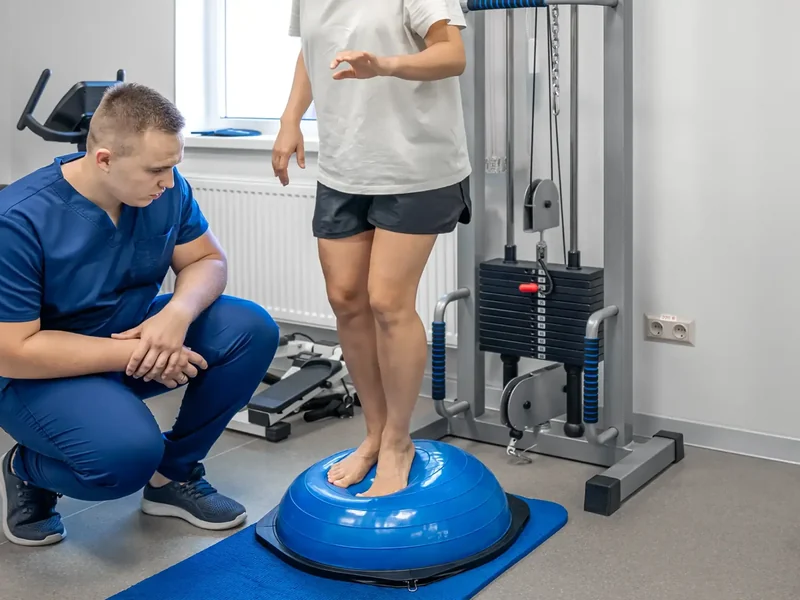
Your inner ear tracks every tilt and turn of your head and reports it to your brain as fast as you move. When that signal is damaged or delayed, your brain is working from information that no longer matches the room, so it hedges. You feel the hedging as unsteadiness, a floating sensation, or a lurch when you turn quickly. It is the most common reason balance changes without leg weakness, and one of the most retrainable.
Balance is a strength problem more often than people expect. Catching yourself after a stumble takes a fast, forceful contraction from your glutes, quads and calves inside a fraction of a second. Strength fades quietly, especially after an illness or a hospital stay, and it fades fastest in exactly the muscles that do the catching. You do not notice until the moment you need them. Rebuilding that strength is the most direct thing physical therapy does about fall risk.
The soles of your feet are covered in sensors telling your brain what surface you are on and where your weight sits. When nerve changes dull those sensors, your brain loses its map of the ground and borrows your eyes instead. That is why the hallway at night or a busy patterned carpet suddenly feels dangerous. Training balance on graded surfaces, with vision deliberately taken away, teaches your nervous system to get more out of the signal that is still there.
Steady walking depends on the ankle rolling smoothly from heel to toe and the hip extending behind you. When either stiffens, the stride shortens and the foot lands flat. A short, flat step gives you less time to correct when the ground is not where you expected it, which is why curbs, door thresholds and tree roots become the places people trip. Restoring motion at the ankle and hip changes the shape of the step itself, not just the strength behind it.
When a stroke, a neurological condition or a head injury changes how the brain sends and receives movement signals, walking stops being automatic. It becomes something you have to think your way through, and thinking is slower than doing. This is retrainable work rather than a fixed state. Guided, repetitive practice at the right level of difficulty is how the nervous system builds new routes for balance and gait.
This one is not in your head and it is not vanity. After a fall, or even a close call, most people quietly narrow their world. Fewer errands. No stairs without a rail. Less walking. Every one of those decisions is reasonable on its own, and together they remove the exact activity that keeps you strong. Less walking means weaker legs, weaker legs mean more unsteadiness, and more unsteadiness means less walking. Breaking that loop is as much a part of treatment as any exercise.
How physical therapy in Stoneham helps.
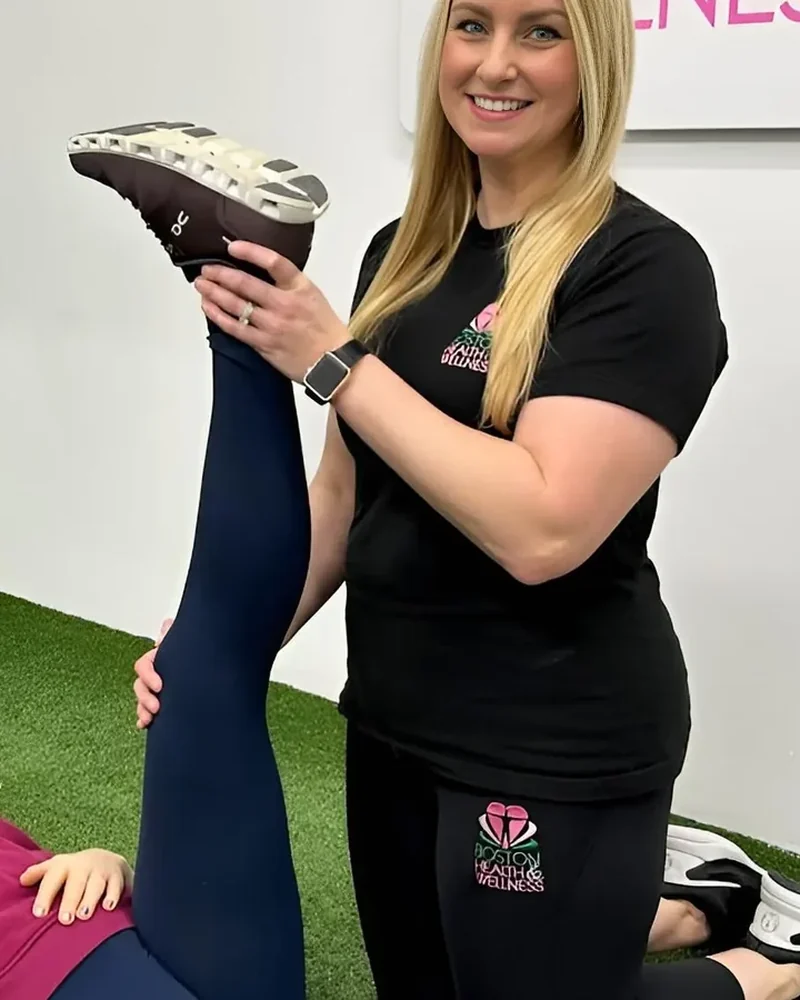
The evaluation comes first, because unsteady is a symptom, not a cause. Your licensed physical therapist tests the systems separately: how your inner ear responds to head movement, how much force your hips and ankles actually produce, how well your feet read the surface under them, and what your walking looks like when you turn or carry a bag in one hand. That tells us which system is failing and which ones are covering for it.
Then hands-on work, because stiff ankles, restricted hips and a locked-up midback limit the motion balance depends on. Joint mobilization and soft tissue work restore that range faster than exercise alone. After that we load it. Balance improves through progressive challenge, so we begin where you can succeed with support in reach, then take the support away as you earn it. Narrower stance. Softer surface. Eyes closed. Head turning while you walk. Then curbs, stairs and the uneven ground outside. If dizziness is part of your picture, vestibular therapy and our care for dizziness and vertigo run alongside the strength work, not after it. Massachusetts is a direct access state, so you can start without waiting on a referral.
What to expect from your recovery.
Evaluation
Your first visit is one on one and mostly testing. Balance in different stances, gait with and without a task, hip and ankle strength, foot sensation, and how your eyes and inner ear behave when your head moves. You will also tell us where you feel least safe, because that list becomes the plan.
Hands-on plan
Restricted ankles, hips and midback get treated directly with manual therapy so your body can actually reach the positions balance requires. In the same session you start guided balance work at a level where you can succeed with support in reach, so you push hard without real risk of going down.
Progressive strengthening
Support comes away as strength arrives. Surfaces get less forgiving, tasks get more like life, and eventually you turn your head, change direction and step over things without planning how to survive it. You see the same therapist every visit, so nobody has to be re-convinced of what you can do.
I had my second course of PT at BH&W in Stoneham after a back injury.
Pain rarely travels alone.


Ready when you are.
Saturday: 7:00am - 1:00pm | Sunday: Closed