Auto Accident Injuries Treatment in Stoneham
You walked away from it, and then two days later your neck would not turn, your back ached by lunchtime, and you were sorting out a claim on top of everything else.
What causes auto accident injuries?
Almost nobody feels the worst of a crash on the day of the crash. Adrenaline is an effective painkiller and it is gone by morning, which is why day two and day three are the ones people describe. A collision loads your body faster than your muscles can respond. Everything that would normally brace, the neck, the midback, the shoulder in the seatbelt, the leg against the floor, absorbs force in the wrong order and at the wrong speed. What follows is not one injury. It is irritated joints, strained tissue and protective guarding, all feeding each other.

In a rear impact the seat pushes your torso forward while your head briefly stays put, then snaps to catch up. It is over before the muscles that stabilize your neck can contract. That leaves small neck joints irritated and the deep stabilizing muscles overstretched, while the big surface muscles clamp down to compensate. The result is the familiar pattern: a neck that will not turn, a headache at the base of the skull, shoulders that feel welded up.
After a crash your nervous system turns sensitivity up and locks the area down. That is correct in the first days. The problem is that guarding does not switch itself off. Muscles stay contracted, the joints underneath stop moving fully, and stiffness gets read as more damage, so you move even less. This loop is the biggest reason a crash injury that should have settled is still there months later.
The small facet joints that guide your spine take a lot of the load in a collision, particularly if you were turned at the moment of impact. Irritated facets produce pain that is hard to point at, often felt as a band across the shoulders or a deep ache to one side of the low back that worsens with sitting. They respond well to hands-on treatment paired with movement, and poorly to rest.
The seatbelt does its job, and it does it across one shoulder. Your hands are on the wheel, so the arms take a shock they were not braced for, and your leg is often pressed hard into the floor. Those loads produce shoulder, hip and knee irritation that gets overlooked because the neck hurts more. It shows up later, when you reach overhead and find the range is not there.
Strained muscle heals, but it heals into whatever length and load you give it. Weeks of moving carefully means it heals short and weak, and everything around it loses capacity too. This is why people feel roughly fine at rest and then flare badly the first time they lift something normal. Tissue needs graded load to remodel properly. Waiting to see if it settles is what turns a manageable injury into a stubborn one.
When turning your head hurts, you start turning your whole trunk. When one shoulder is sore, the other one takes the bag, the door and the steering. These substitutions happen without any decision on your part, loading joints never asked to do that job. Weeks later the complaint is often somewhere the crash never touched. Retraining the original movement is what stops the new problem from becoming permanent.

How physical therapy in Stoneham helps.
The evaluation is where a crash injury gets untangled, because you rarely have one thing wrong. Your licensed physical therapist takes the story of the collision itself, which direction you were hit and where you were braced, then tests the neck, midback, shoulders and hips separately and works out what is irritated, what is guarding and what is just compensating. That distinction decides the plan, and it is why two people from the same crash do not get the same program.
Hands-on work comes next, because early on the limitation is stiffness rather than weakness. Joint mobilization to the neck and midback, soft tissue work through the guarded muscle, and dry needling where a trigger point is holding the whole area hostage. Most people notice range come back before pain fully settles, and that is the correct order.
Then loading, deliberately and in steps. Deep neck and scapular strength first, then trunk and hip work, then the real movements: reaching overhead, lifting from the floor, checking your blind spot without bracing for it. Start early rather than waiting to see if it settles, because guarding and deconditioning both compound. We accept motor vehicle and auto insurance claims, and Massachusetts direct access means you can begin without a referral. If the neck is the center of it, our neck pain care covers that pattern in more depth.
What to expect from your recovery.
Evaluation
One on one, and it starts with the crash itself before anything is tested. Then neck, midback, shoulders and hips, checked separately, so the plan targets what is irritated rather than everywhere that hurts. Call ahead and we will verify your benefits, including auto and motor vehicle claims, before you walk in.
Hands-on plan
Treatment starts the same day. Manual therapy to the stiff segments, soft tissue work through the guarding, and specific gentle movement you repeat at home between visits. The aim is to give the area permission to move again, because returning motion tells your nervous system it can stand down.
Progressive strengthening
Once things move, they get loaded. Deep neck and shoulder blade strength, then trunk and hip work, then the tasks the crash took away: lifting, reaching, driving without bracing. You see the same therapist throughout, which matters most on the weeks progress is not linear.
Boston Health and Wellness is a very good place to receive physical therapy, the caring staff and therapists are the best! Highly recommend, actually a friend went and was also very pleased.
Pain rarely travels alone.

Pre & Post Surgical Conditions
Go into surgery stronger. Come out of it recovering faster.
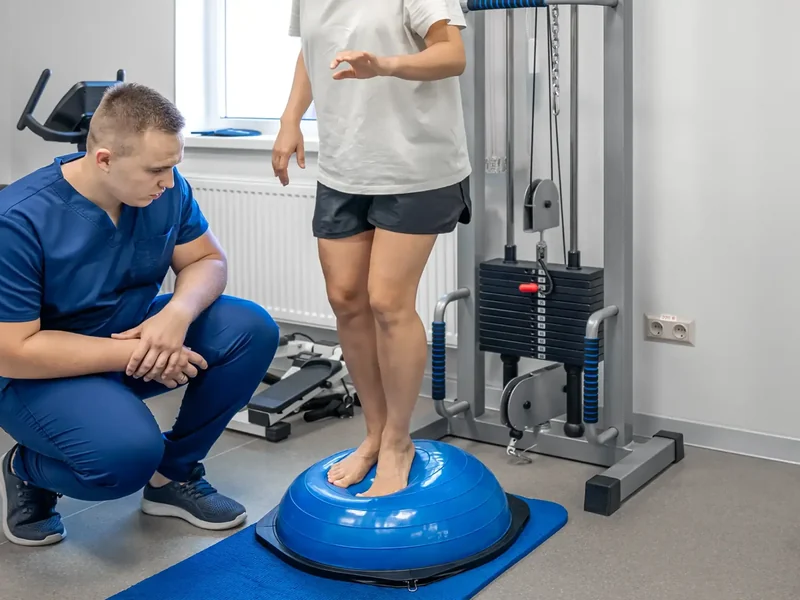
Balance & Gait Disorders
Confidence on stairs, curbs and uneven ground, rebuilt step by step.
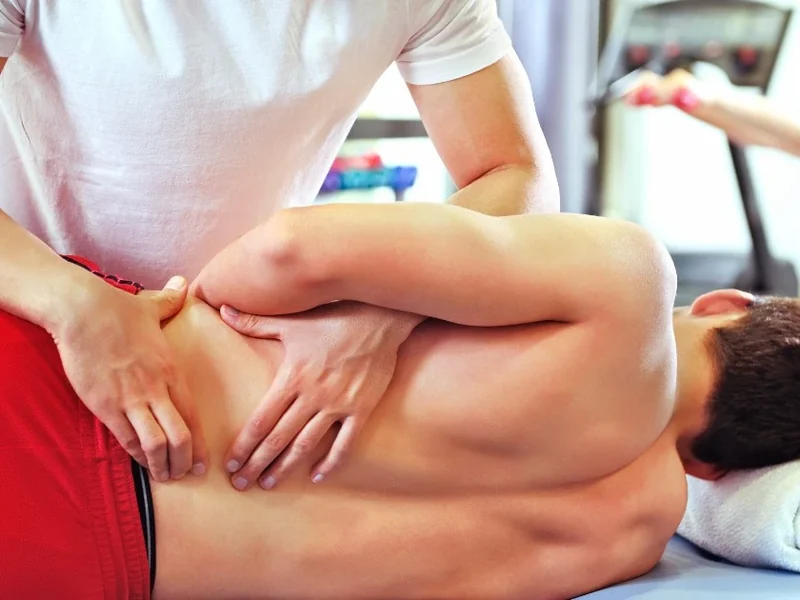
Active Release Technique
Hands-on soft tissue work that breaks up scar tissue and frees restricted muscle.
Ready when you are.
Saturday: 7:00am - 1:00pm | Sunday: Closed
Pick a day and time that works for you in our online scheduler. Prefer to talk it through? Call (617) 843-5320.
Book Online Now